

What to look for, what to ask, and why your dog does not have to be easy.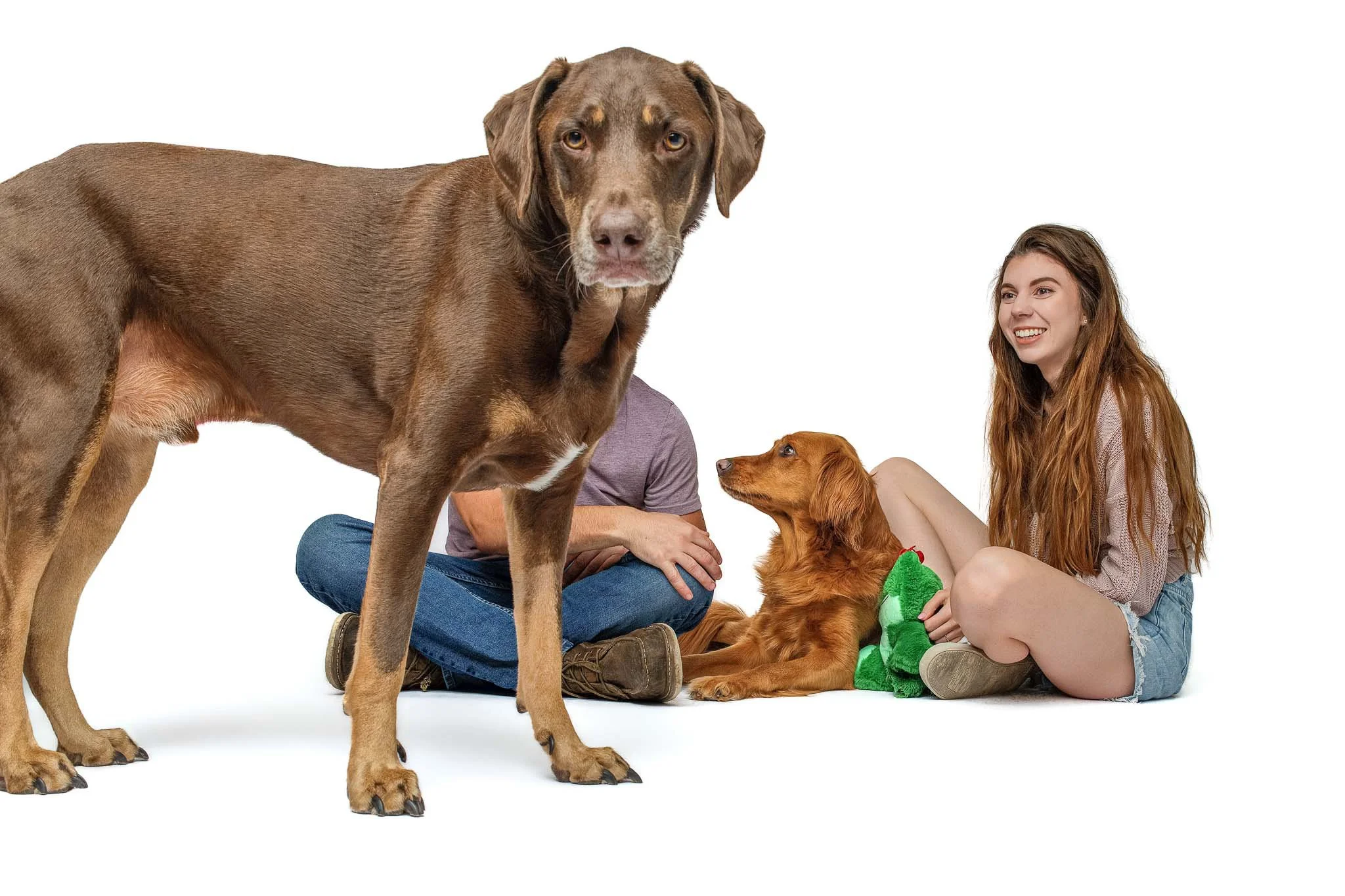
Hank walked into my studio and started licking his lips.
His eyes went wide. His body went stiff. Everything about him said the same thing. I don't know you, and I don't like this.
His mom, Michaela, had warned me. Hank is a German Shorthaired Pointer and Labrador mix with a lot of anxiety and a real case of stranger danger. She chose a studio session on purpose, to cut out every distraction she could. And she still wasn't sure we'd get a single usable frame.
I'll tell you how that session ended. First, the question that brought you here.
There are more pet photographers across North and South Carolina than ever, from Charlotte and Raleigh to Charleston, Greenville, and right here on the Crystal Coast. That's good news for you. It also makes the choice harder. Here's what actually matters, from someone who has been behind the camera since 2004 and has spent most of those years with dogs and horses.
What should you look for in a pet photographer's portfolio?
Look for consistency, and look for dogs who look like themselves. Every photographer's website shows their best work. That's the point of a website. So look past the three showstoppers and ask whether the whole gallery holds up.
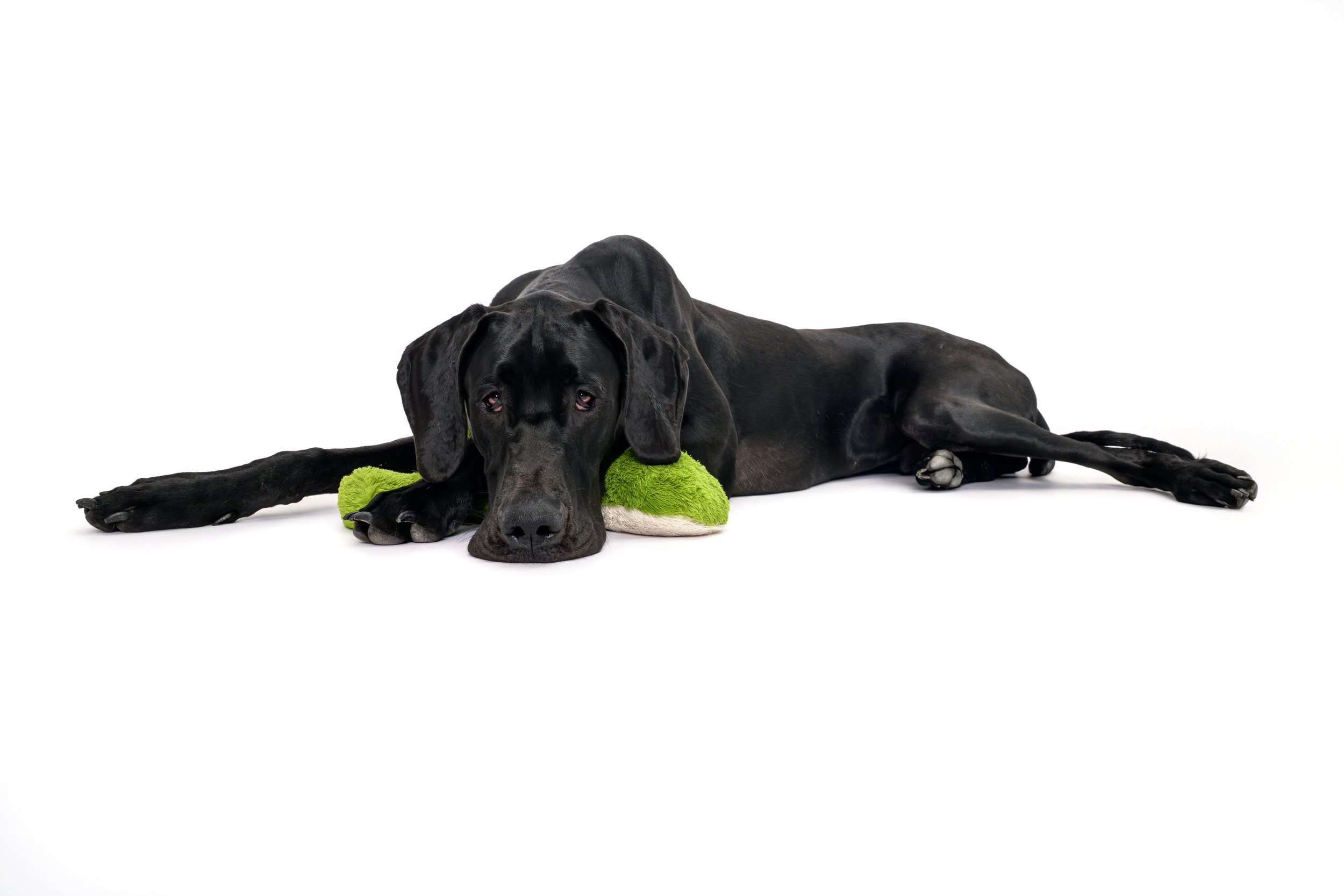
Do the dogs look present and alert, or tolerant and bored? Is there a real range of coats, sizes, ages, and energy levels? A black dog and a white dog need completely different light, and someone who photographs animals for a living should handle both without the black dog turning into a shadow.
Then look at recent work. Instagram, the blog, anything from the last year. A portfolio can be built from a decade of sessions. Recent images tell you what that photographer is creating right now. And be honest with yourself about the editing style. You'll be living with it for a long time.
How can you tell if a photographer really understands dogs?
Ask what they do when a dog says no. A great portrait photographer isn't automatically a great dog photographer. Dogs don't take direction, and they couldn't care less that the light is perfect right now. Photographing them well means reading body language, knowing the difference between engagement and stress, and working at the dog's pace instead of your own.
So ask the questions that matter. How long have you photographed animals as your main focus? How do you work with a reactive or fearful dog? What happens when a dog has had enough?
Someone who has spent years with dogs will answer fast and specifically. Lip licking. Whale eye. A tucked tail. A dog who suddenly needs to sniff every inch of the floor. That's a language, and your photographer should be fluent in it.
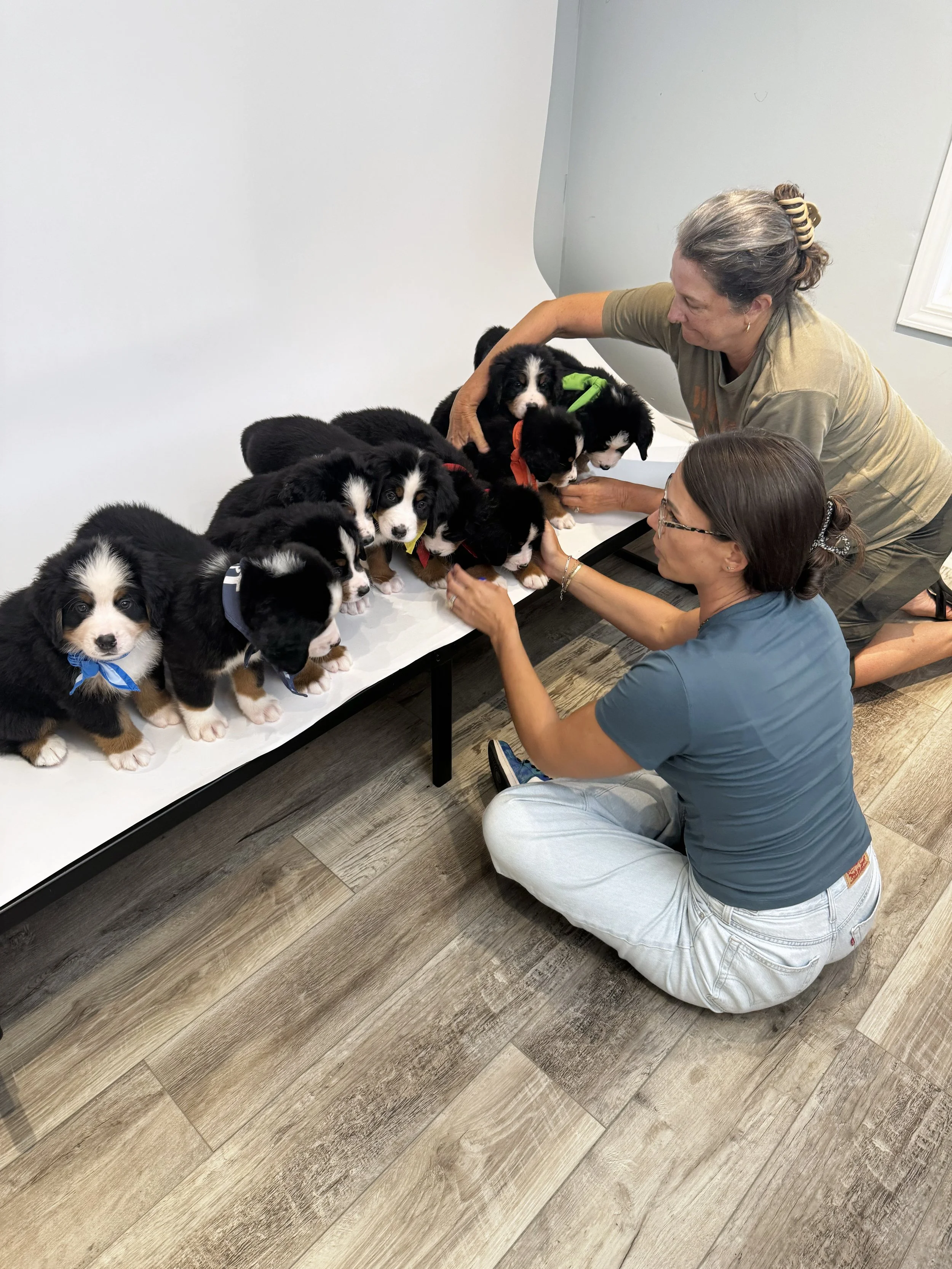
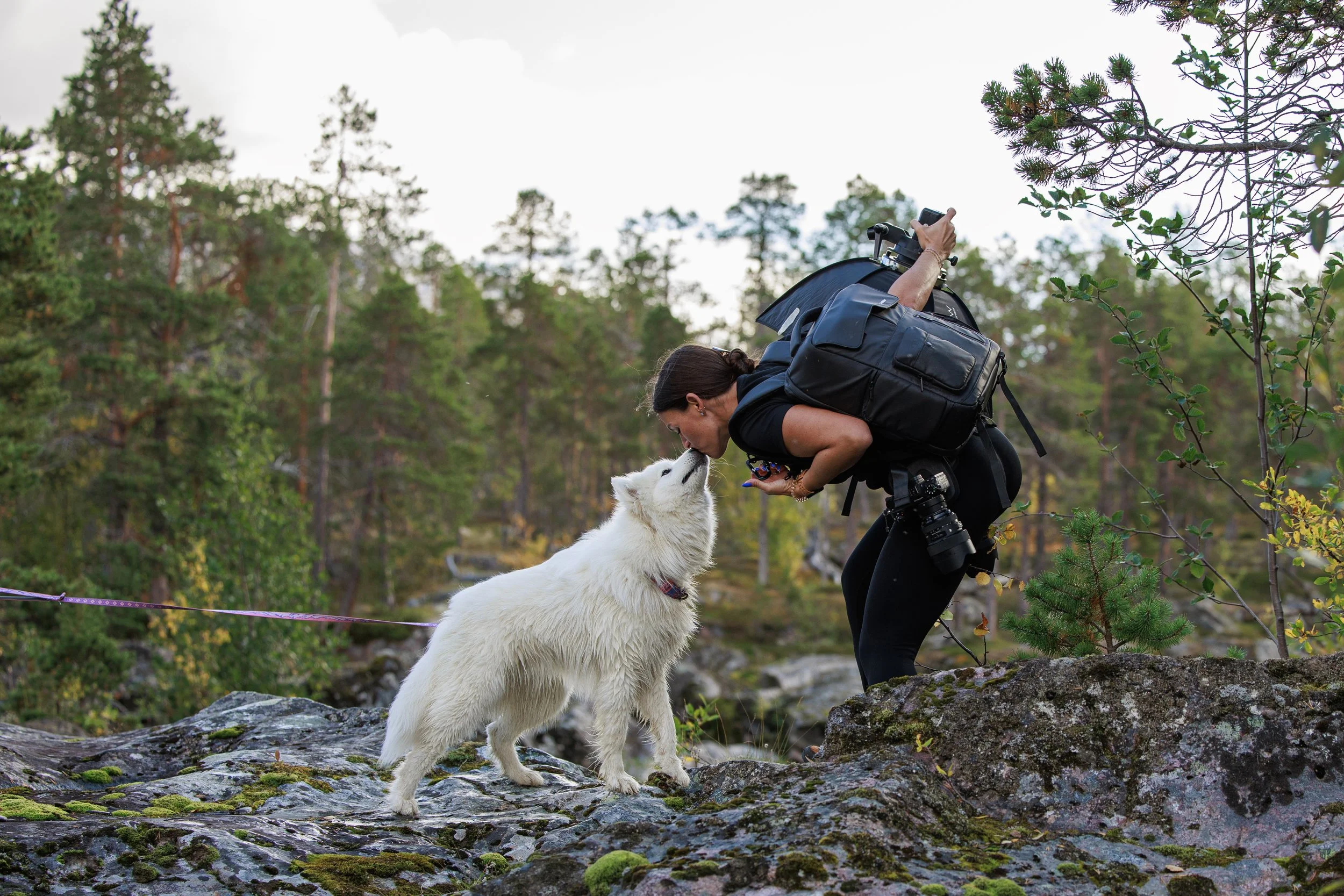
I learned a lot of this at home. My Great Dane Eames is situationally reactive, and we've put real work into helping him feel more neutral around new people, unfamiliar dogs, and fast movement. That work takes time. It doesn't happen the week before a photo session, and it shouldn't have to.
Can a reactive or fearful dog have a photo session?
Yes. A reactive or anxious dog can absolutely have a beautiful session. What it takes is a photographer who lets the dog set the pace. I hear it all the time. "I'd love photos, but my dog is reactive." I get it, I really do. But a dog working through big feelings still deserves to be remembered. Sometimes those are the dogs their families want photographed most.
Back to Hank.
I didn't reach for him. I didn't ask for a sit. I let him walk the studio and check every corner, and I watched. I'll be honest, he never fully relaxed around me. But he started to feel like he was the one in control, and that was enough. Then he took a treat from my hand. Michaela couldn't believe it. Hank does not take treats from strangers.
She had also told me something important. Hank is the older dog, but he looks to his younger sister, Lilah, for comfort. So we extended the session and brought Lilah in for Hank's sake. Lilah came in a little nervous herself. With her there, Hank softened.
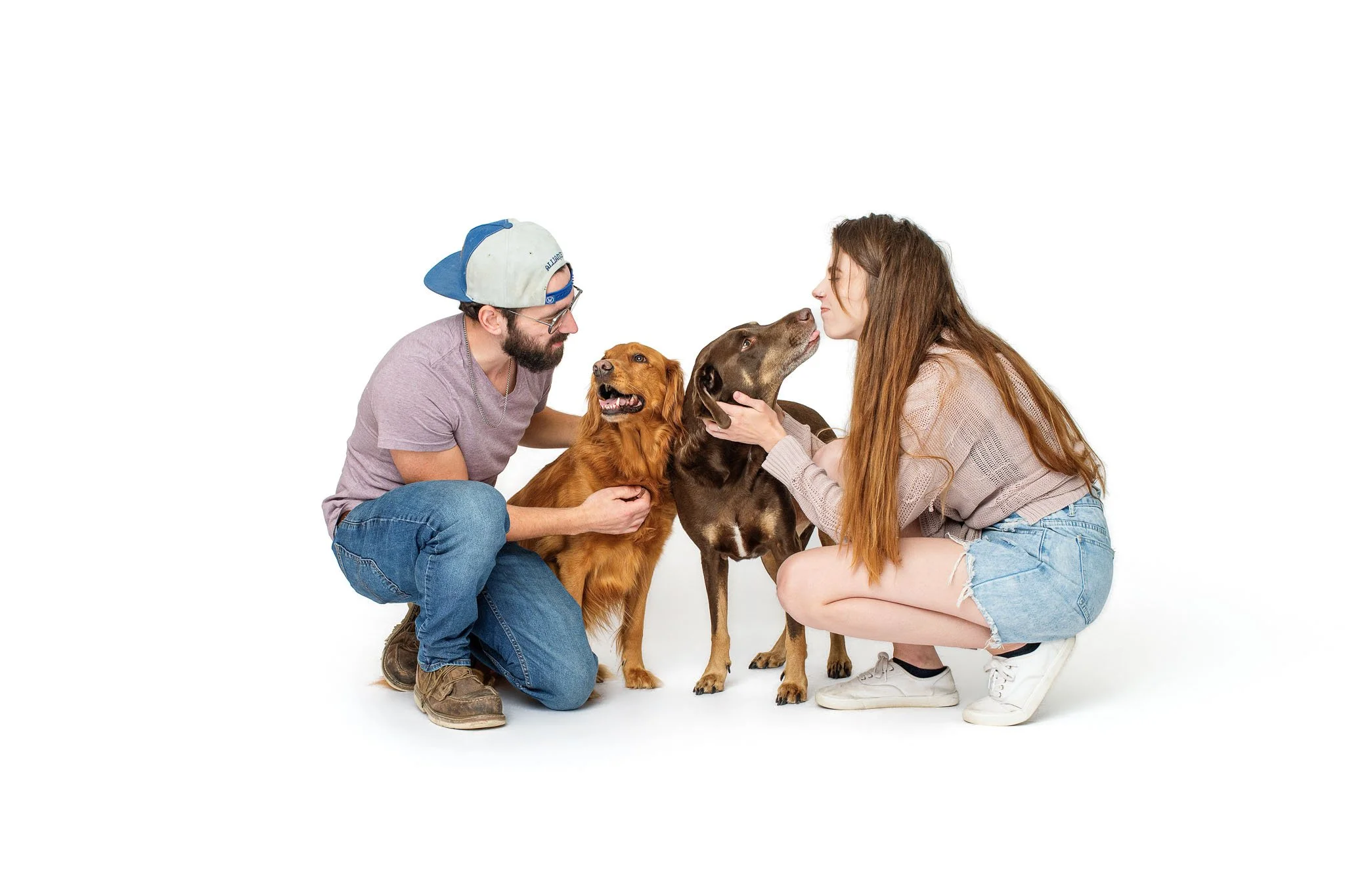
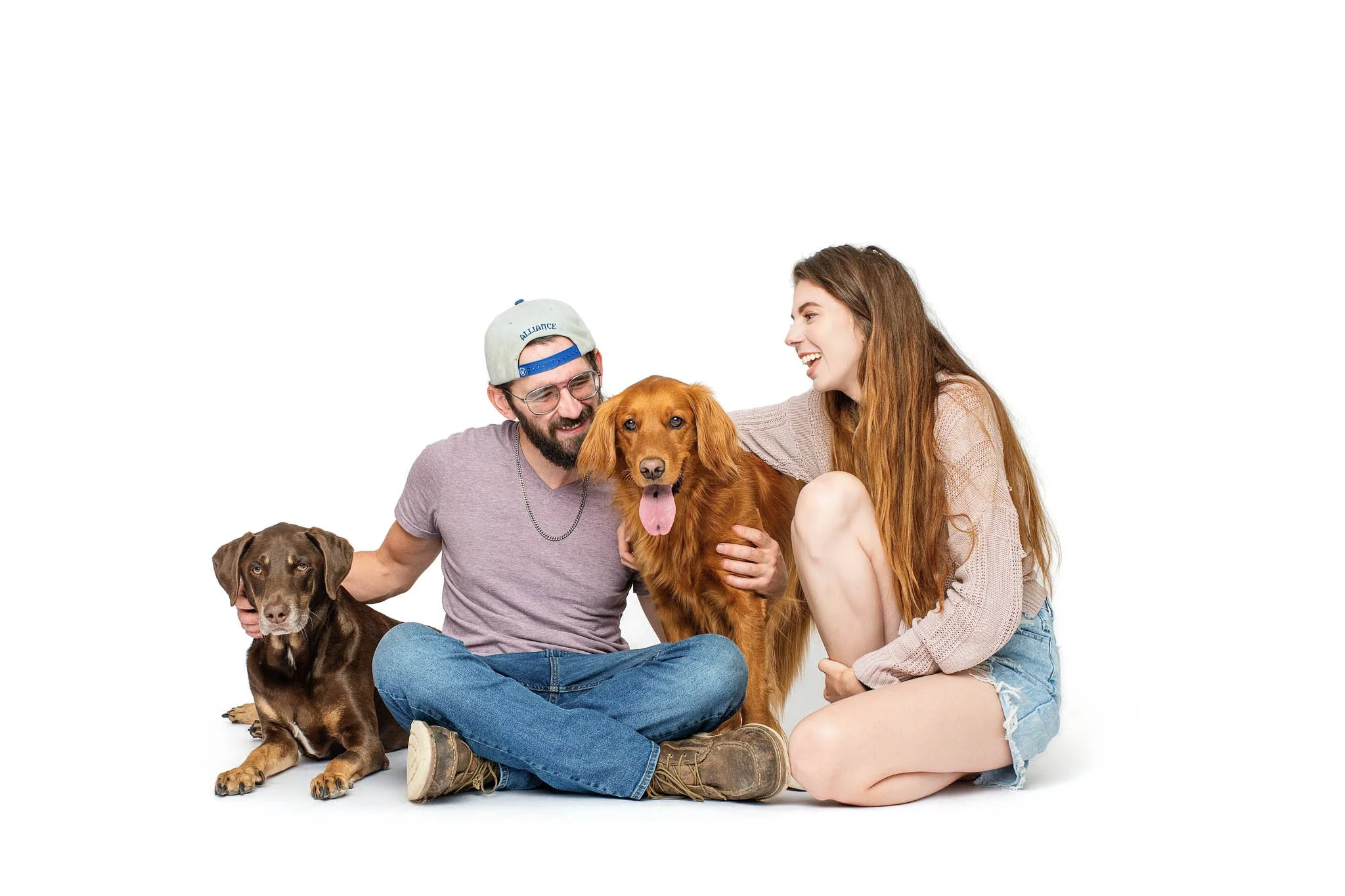
Then the personality showed up. During the family portraits, Hank kept stepping in front of everyone to be the center of attention. At home, Michaela said, that's completely him. Around strangers, he usually hides behind her. We were laughing so hard we could barely get the shot.
A studio was the right call for Hank. No passing dogs, no traffic, no surprise skateboard. For another dog, a quiet trail or an empty beach at sunrise does the same job. A good photographer will help you choose. The session was never about getting Hank to perform. It was about reading him, respecting the moments when he or Lilah had had enough, and giving them the space to be themselves in a room they'd never seen before.
What should the process look like before and after your session?
Clear, specific, and explained before you book. Some photographers send a time and a location and that's it. Others walk you through everything, from what to bring to how you'll see your images. Neither is wrong, but you deserve to know which one you're getting.
Ask how they'll help you prepare, how long the session runs, when and how you'll see your images, and what ordering looks like. Clear answers mean a real process. Vague ones are worth noticing.
Here's how mine works. Sessions are dog led, so plan on about 60 to 90 minutes with no clock running down. Your dog arrives on the leash and collar or harness they walk best on. I bring the leads for the portraits and edit them out afterward. About one to two weeks later, we sit down together, at the studio or virtually, to see your images and design your artwork. Read more on the Dog Photography Sessions page.
Do you want digital files or finished artwork?
Decide this before you compare photographers, because it changes everything. Some photographers deliver digital files. Others design finished artwork, like framed wall art and heirloom albums, that arrives ready to hang or hold. Both are legitimate. They're just different things, with different processes and very different outcomes for your walls.
If you want your dog on the wall and not only on your phone, look for a photographer who asks where the images will live from the very first conversation. You can see how I approach it on the Artwork page.
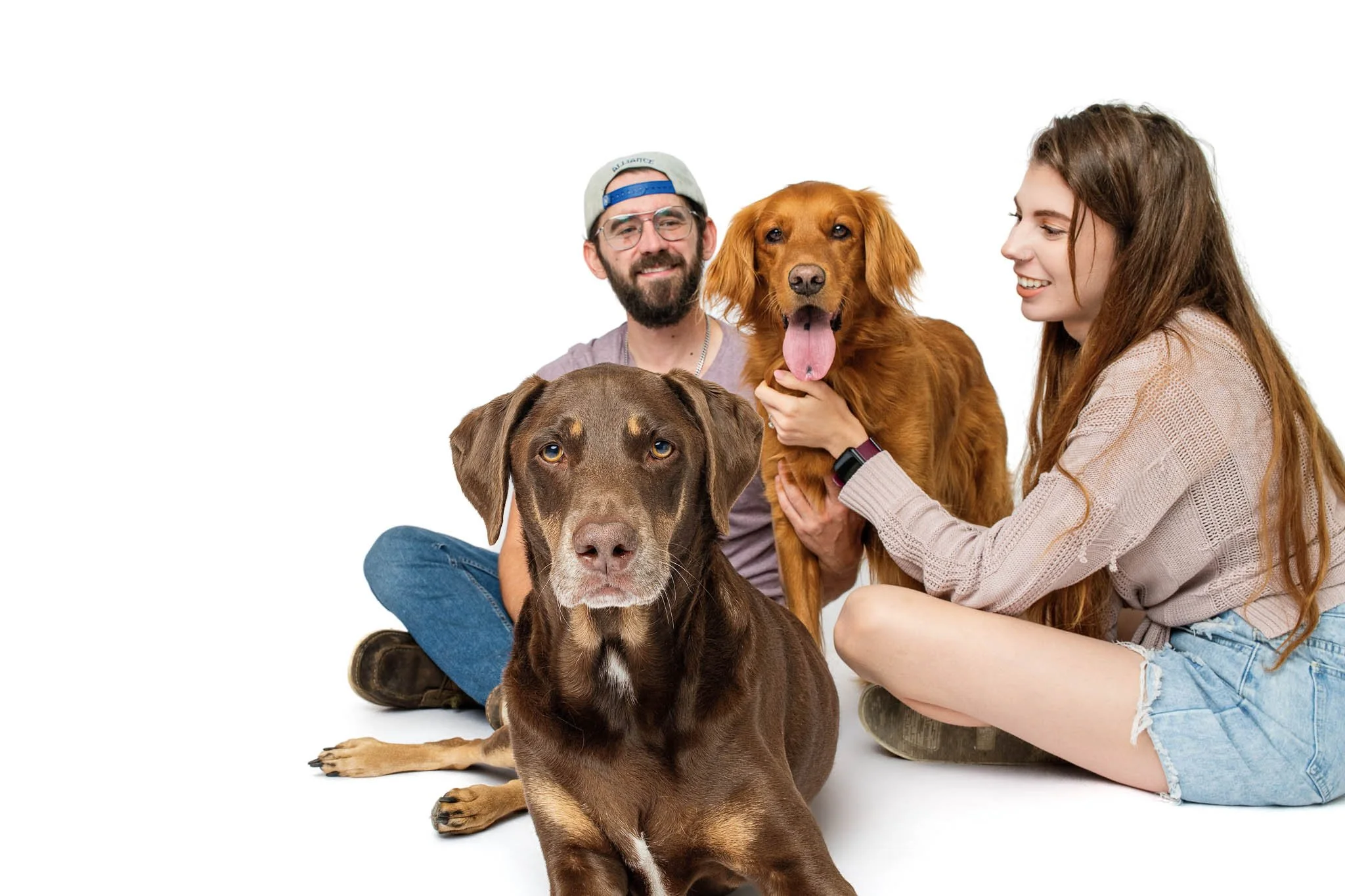
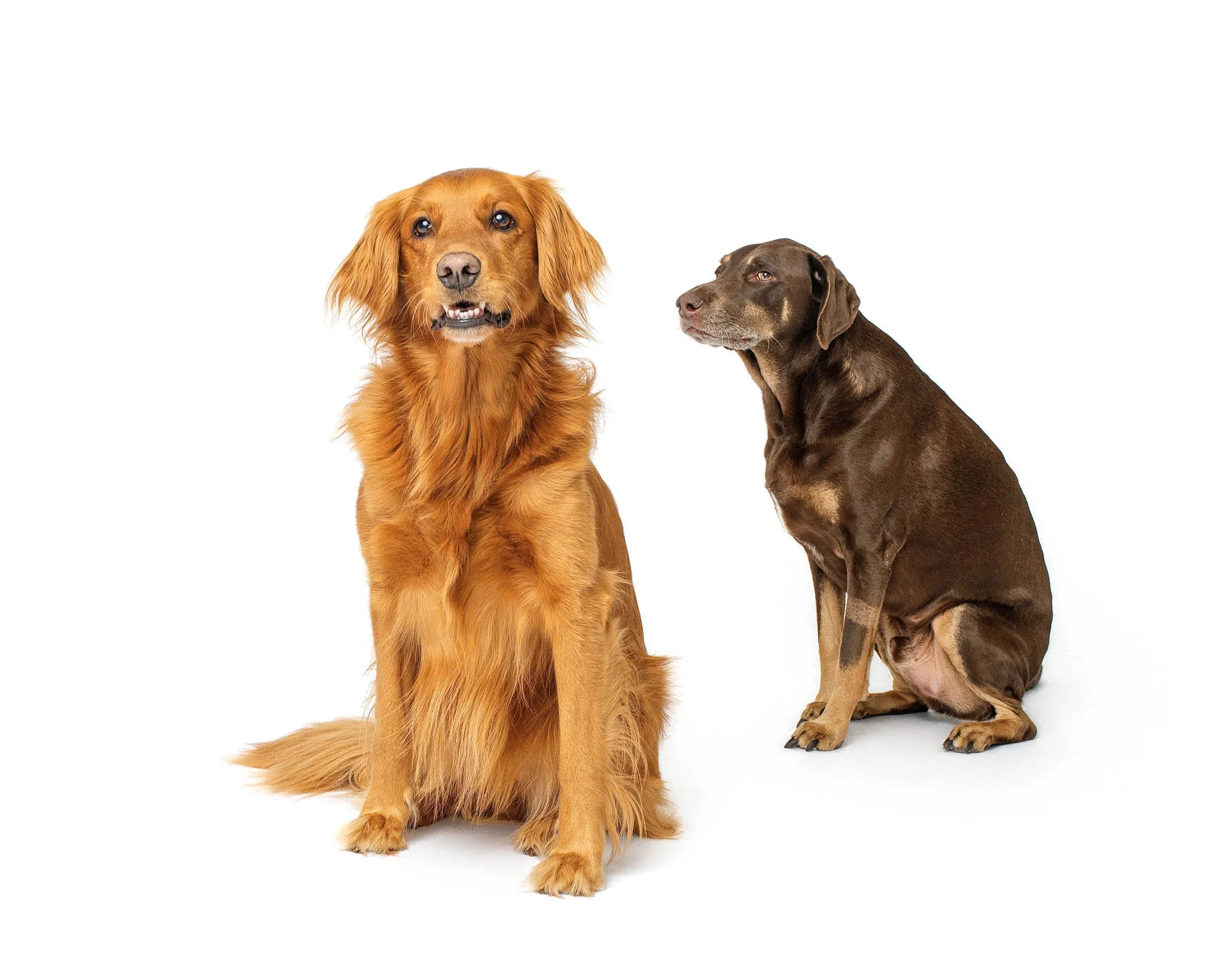
Hank and Lilah ended their session asleep on my studio sofas. Michaela had been sure we didn't get anything. When she saw her images, she couldn't stop pointing out looks she knew by heart. Hank walking in front of the whole family with a dead stare into the camera, then lying down like he owned the place while Lilah sat behind him. Lilah up front with Hank giving her the side eye. Every image said something she couldn't leave out.
That's how they ended up with the largest album I've ever designed. Twenty six spreads, that’s 52 pages.
What practical questions should you ask before you book?
Ask whether they run a real, insured business, where sessions happen, and whether they regularly photograph the animals you have. A legitimate studio carries liability insurance and is registered to do business in its state. That protects your dog as much as anyone. It's a fair question, and a professional won't mind it.
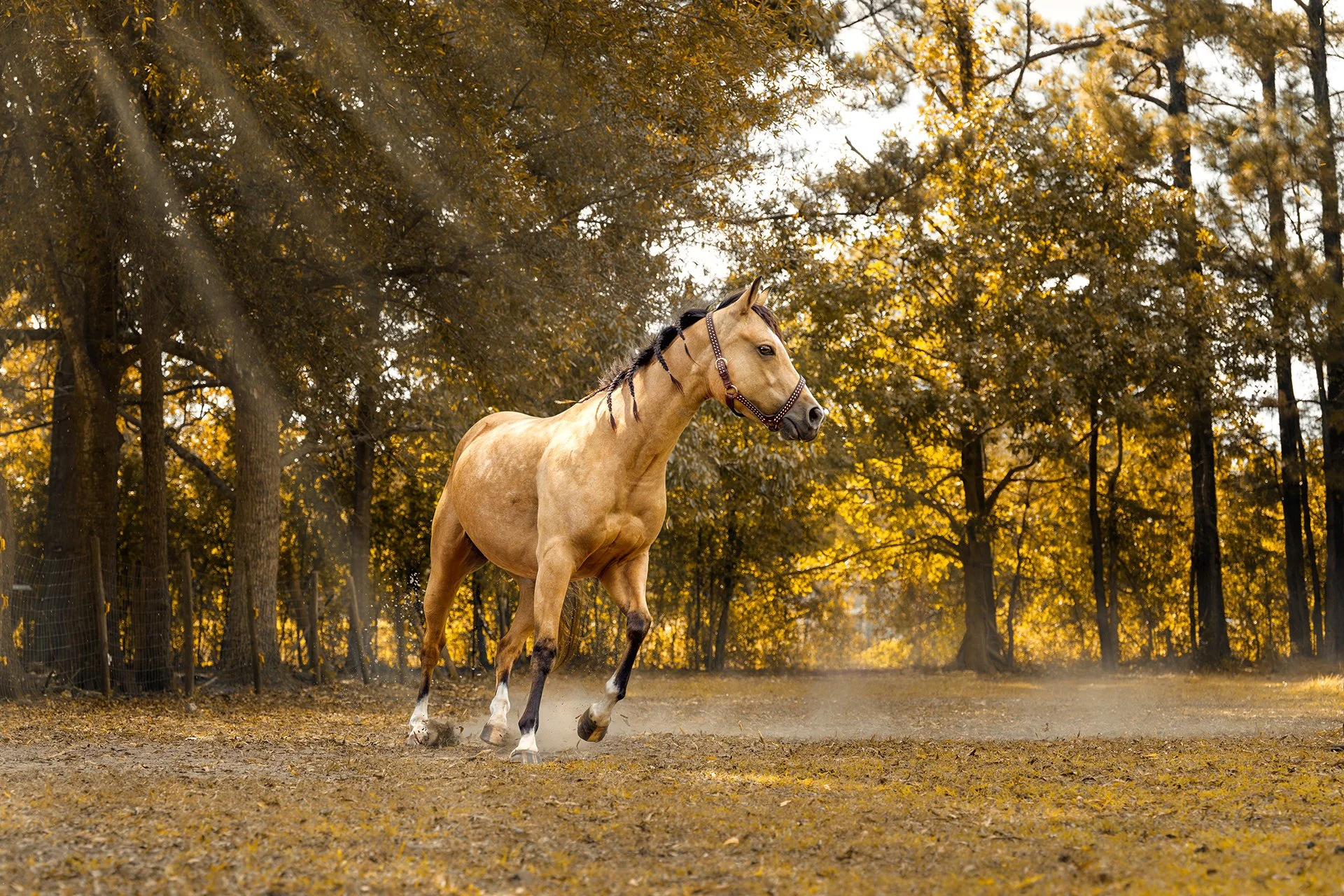
Ask where sessions happen. A studio, a beach, a wooded trail, a barn. If your family includes a horse, ask whether they photograph horses regularly or only now and then. Horses are their own specialty, from working safely around a big animal to lighting a buckskin or a gray coat well. Mine are on the Horse Photography Sessions page.
And if your dog is a senior, or a dog of any age facing a diagnosis, ask whether they offer sessions built for that. Mine are called Legacy Sessions.
How do you know you've found the right pet photographer?
You trust them with your dog. The best photographer for your dog is the one whose work you love, whose process makes sense to you, and who you trust to see your dog the way you do. Not the dog you wish would show up. The one who actually does.
Hank never warmed up to me. He didn't have to. He got to be exactly who he is, and his family got 52 pages of proof.
If you've been putting off photos because your dog or horse isn't easy, I'd love to hear about them. What makes them nervous, what makes them ridiculous, and what you never want to forget. Let’s Chat!
Questions about choosing a pet photographer
Can a photographer photograph a dog that won't sit or stay?
Yes. My sessions are dog led, and a dog does not need a reliable sit or stay to end up with a beautiful portrait. I bring the leads used for the portraits and edit them out afterward, so even a dog who stays leashed the whole time ends up with clean, finished artwork.
Is a studio or an outdoor session better for a nervous dog?
It depends on the dog. A studio removes passing dogs, traffic, and new smells, which is why it worked so well for Hank. Some dogs settle better outdoors somewhere quiet, like an empty beach or a wooded trail at sunrise, and we decide together before your session.
Do you photograph dogs in South Carolina?
Yes. My studio is in Newport, near Emerald Isle, North Carolina, and I'm available to travel, including regular trips to Greenville, SC. Tell me where you and your dog are and we'll plan from there.
Dog photography sessions
Every dog has their own way of being in the world. I'd love to photograph yours.
Nervous, goofy, stubborn, or all three. Start by seeing how a session works.
Jennifer Wakefield Canine & Equine Photography is a fine art dog and horse portrait studio in Newport, near Emerald Isle, on the Crystal Coast of North Carolina, and available to travel.